Pilates offers a fantastic entry point into fitness, focusing on controlled movements and mindful engagement. Many resources,
like downloadable charts from BODYBAR Pilates, provide a structured approach for newcomers. These beginner guides, often available
as PDFs, emphasize form and alignment, making it accessible to practice at home. Explore introductory routines and exercises
designed to build a solid foundation, enhancing strength, flexibility, and overall well-being, starting today!
What is Pilates?
Pilates, developed by Joseph Pilates, is a low-impact exercise system designed to improve physical strength, flexibility, and posture. It’s a method centered around controlled movements, precise technique, and mindful breathing. Unlike some workouts focused on high repetitions or speed, Pilates prioritizes quality over quantity, demanding focused attention to each exercise.
Many beginners find Pilates approachable, and readily available resources, such as Pilates exercises for beginners PDFs, can greatly aid in learning the fundamentals. These guides often break down movements into manageable steps, emphasizing proper form and alignment. Resources like those from BODYBAR Pilates offer wall-supported exercises, simplifying the learning process and allowing individuals to concentrate on technique. It’s about building a strong core and developing body awareness, leading to improved movement patterns and a reduced risk of injury. The challenge often lies in precise control, not simply going harder or faster.
Benefits of Pilates for Beginners
Pilates offers a wealth of benefits, particularly for those new to exercise. It’s renowned for strengthening the core, improving posture, and increasing flexibility – all crucial for overall well-being. Beyond the physical, Pilates cultivates body awareness and mindful movement, reducing stress and enhancing mental focus.
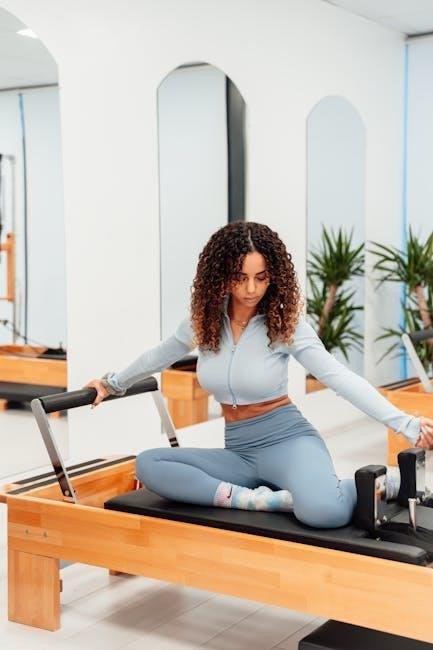
For beginners, accessing Pilates exercises for beginners PDFs can unlock these advantages quickly. These resources often present modified exercises, making the practice accessible regardless of fitness level. Experts highlight that Pilates isn’t solely about strength; it also enhances balance and flexibility. It can even complement other workout routines. Resources like downloadable wall charts help focus on form, a key element for injury prevention and maximizing results. Starting with a no-equipment routine, as found in many beginner guides, allows you to experience the benefits from the comfort of your home.
Essential Pilates Principles
Pilates emphasizes precision, control, and core engagement, vital for safe and effective practice. Beginner PDF guides highlight these principles, ensuring proper form and alignment during exercises.
Core Engagement
Core engagement is foundational to Pilates, acting as the powerhouse driving all movements. It’s not simply about abdominal muscles; it encompasses the deep muscles of the torso, providing stability and support. Beginner Pilates PDF resources consistently emphasize activating these muscles – think drawing your navel towards your spine and maintaining a neutral pelvic tilt.
This engagement protects the spine and enhances the effectiveness of each exercise. Many introductory guides, like those offered by BODYBAR Pilates, demonstrate how to maintain core stability throughout various movements. Focusing on this principle from the start builds a strong foundation, preventing injury and maximizing the benefits of your Pilates practice. Remember, quality of engagement trumps quantity of repetitions!
Precision and Control
Pilates distinguishes itself through an unwavering focus on precision and control, differing significantly from workouts prioritizing speed or intensity. Beginner Pilates PDF guides often highlight this aspect, emphasizing the importance of executing each movement with deliberate accuracy. It’s about quality over quantity, ensuring proper form throughout every exercise.
Resources, such as downloadable charts, demonstrate how to isolate specific muscle groups and move with intention. This mindful approach not only maximizes effectiveness but also minimizes the risk of injury. As noted, Pilates challenges you to move specifically, demanding precise control. Mastering this principle, guided by beginner resources, is crucial for a safe and rewarding practice, building a strong mind-body connection.
Breathing Techniques
Proper breathing is integral to Pilates, acting as a cornerstone of effective movement and core engagement. Many beginner Pilates PDF resources dedicate sections to explaining these techniques, often emphasizing lateral thoracic breathing – expanding the ribcage with each inhale. This deep, controlled breathing supports spinal stability and facilitates optimal muscle activation.
Coordinating breath with movement isn’t merely about oxygen intake; it’s about creating internal pressure to support the core and enhance the quality of each exercise. Beginner guides often illustrate how to exhale during exertion, assisting in drawing the abdominal muscles inward. Mastering this synchronization, as detailed in downloadable charts, is vital for maximizing the benefits of Pilates and achieving a deeper connection to your body.
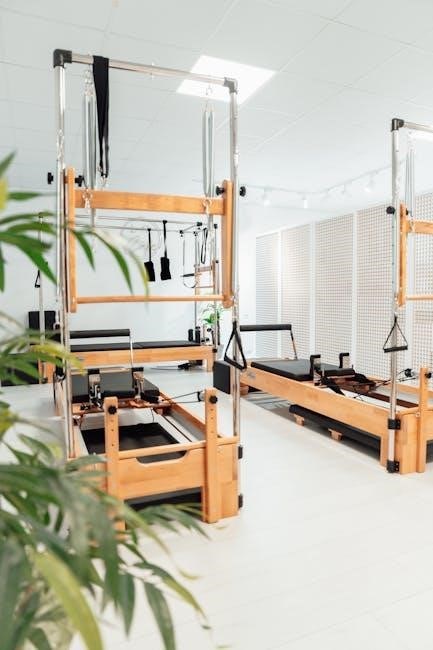
Beginner Pilates Exercises ‒ Mat Work
Mat work introduces foundational Pilates exercises, easily accessible with PDF guides. Start with ‘The Hundred’, ‘Roll Up’, and ‘Single Leg Circles’ to build core strength and control.
The Hundred
The Hundred is a classic Pilates exercise, excellent for building core strength and endurance – a cornerstone of any beginner’s routine. Often detailed in beginner Pilates PDF guides, it involves lying supine with knees bent and feet lifted (or lowered for modification).
Arms pump rhythmically while engaging the abdominal muscles, coordinating with controlled inhales for five counts and exhales for five counts, repeated ten times – hence “The Hundred.” Maintaining a stable spine and precise movements is key.
Beginners may find it challenging, so modifications like keeping the head down or feet on the floor are encouraged. Focus on quality over quantity, prioritizing core engagement and breath control. Mastering this exercise sets a strong foundation for more advanced Pilates work.
Roll Up
Roll Up is a foundational Pilates exercise often featured in beginner PDF guides, designed to strengthen the core and improve spinal articulation. Starting supine with legs extended and arms overhead, the movement involves slowly curling the spine off the mat, reaching towards the toes.
Controlled breathing is crucial – exhale as you roll up, inhale as you slowly lower back down. Maintaining a C-curve in the spine throughout the movement is essential for protecting the lower back. Beginners may find it helpful to bend their knees or use arms to assist the roll.
Focus on engaging the abdominal muscles to initiate the movement, rather than relying on momentum. This exercise builds core strength, improves posture, and enhances body awareness, preparing you for more complex Pilates exercises.
Single Leg Circles
Single Leg Circles, frequently included in beginner Pilates PDF resources, are excellent for hip mobility, core stability, and leg strength. Starting supine with one leg extended towards the ceiling and the other bent with the foot flat on the mat, the extended leg performs small, controlled circles.
Maintaining a stable pelvis and engaged core is paramount; avoid rocking or tilting the hips. The movement originates from the hip joint, not the lower back. Beginners can start with smaller circles and gradually increase the range of motion as their strength and control improve.
Focus on precision and control throughout the exercise, visualizing the leg drawing circles in the air. This exercise enhances coordination, strengthens the deep core muscles, and improves overall body awareness.
Rolling Like a Ball
Rolling Like a Ball, a playful yet challenging exercise often found in beginner Pilates PDF guides, targets the core and improves spinal mobility. Starting in a seated position with knees bent into the chest and hands holding onto the shins, gently roll back onto the shoulders, then back up to the starting position.
Maintaining a C-curve in the spine throughout the movement is crucial, protecting the neck and lower back. Avoid rolling onto the neck and keep the head and shoulders slightly rounded. The core should be deeply engaged to control the rocking motion.
This exercise enhances coordination, strengthens abdominal muscles, and massages the spine. Beginners may find it helpful to start with smaller rolls and gradually increase the range of motion as they gain confidence and control.
Spine Stretch Forward
Spine Stretch Forward, a foundational Pilates exercise frequently detailed in beginner PDF resources, focuses on spinal articulation and hamstring flexibility. Begin seated with legs extended forward, feet flexed, and arms extended forward at shoulder height.
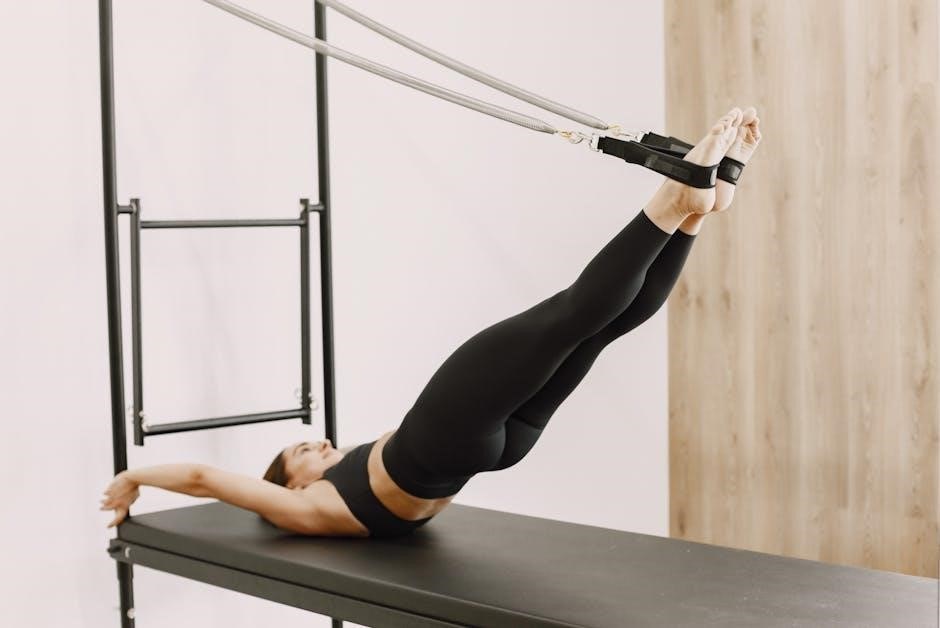
Inhale to prepare, then exhale as you gently curl the spine forward, reaching towards your toes. Maintain a C-curve in the spine, avoiding rounding the lower back excessively. Keep your abdominal muscles engaged throughout the movement to support the spine.
This exercise improves posture, increases spinal mobility, and stretches the hamstrings. Beginners should focus on maintaining proper form over reaching far, prioritizing spinal curvature and core engagement. Modifications include bending the knees slightly if hamstrings are tight.
Swan Dive
Swan Dive, often illustrated in beginner Pilates PDF guides, is an excellent exercise for strengthening the back extensors and improving spinal mobility. Begin lying prone with hands placed under your shoulders, elbows bent and close to your body.
Inhale to prepare, then exhale as you lift your chest off the mat, using your back muscles to create a gentle arch. Keep your shoulders relaxed and down, avoiding shrugging. Focus on lengthening the spine rather than lifting excessively high.
This exercise counteracts the effects of prolonged sitting and improves posture. Beginners should start with small movements, gradually increasing the range of motion as strength improves. Proper core engagement is crucial to protect the lower back.
Pilates for Hip Strength
Pilates powerfully strengthens hips, vital for injury prevention, as detailed in beginner PDF guides. Targeted exercises build stability and control, enhancing overall movement quality.
Importance of Hip Strength
Hip strength is absolutely fundamental, extending far beyond just aesthetic benefits; it’s a cornerstone of functional movement and injury prevention. A robust hip structure supports the entire kinetic chain, influencing everything from posture and balance to efficient locomotion and athletic performance. Weak hips can contribute to a cascade of issues, including lower back pain, knee problems, and even ankle instability.
Pilates, particularly when utilizing beginner PDF resources and guides, excels at targeting these crucial muscle groups. These materials often highlight exercises specifically designed to activate and strengthen the hip abductors, adductors, flexors, and extensors. Building this foundational strength isn’t about bulk; it’s about creating stability and control, allowing for more efficient and pain-free movement patterns. Prioritizing hip strength through Pilates can dramatically improve your overall physical well-being and enhance your ability to participate in other activities.
Exercises Targeting Hips
Numerous Pilates exercises effectively target hip strength, and many beginner PDF guides showcase modifications for varying fitness levels. The “Single Leg Circles,” for example, directly engages the hip stabilizers while promoting core control. Similarly, variations of the “Clam Shell” – often detailed in downloadable charts – isolate the hip abductors, crucial for preventing knee valgus.
Even foundational movements like the “Roll Up” require significant hip flexor engagement and controlled articulation. The “Hundred,” while primarily a core exercise, demands hip stability to maintain proper form. Exploring resources from BODYBAR Pilates can provide visual demonstrations and progressive exercises. Remember to prioritize precise movements over repetitions, focusing on activating the correct muscle groups. Consistent practice of these exercises, guided by beginner-friendly materials, will yield noticeable improvements in hip strength and overall stability.
Pilates Workout Tips for Beginners
Pilates class success hinges on mindful practice; beginner PDF guides emphasize form over speed. Prioritize control and alignment, adapting exercises to your level!
Focus on Form Over Repetitions
Pilates fundamentally differs from many workout styles; it’s not about completing numerous repetitions quickly. Instead, the core principle revolves around precise, controlled movements. Beginner Pilates PDFs and online resources consistently highlight this crucial aspect. Mastering proper form ensures you engage the correct muscles and prevent injuries, building a strong foundation.
Don’t rush through exercises! Focus on the quality of each movement, paying attention to alignment and breath. A downloadable wall chart, like those offered by BODYBAR Pilates, can visually reinforce correct posture. Even if you only manage a few repetitions with perfect form, it’s far more beneficial than many repetitions performed incorrectly. Prioritize mindful execution, and the strength and flexibility gains will follow naturally; Remember, Pilates challenges you to move specifically with control.
Modifications for Different Fitness Levels
Pilates is remarkably adaptable, making it suitable for individuals of all fitness levels. Beginner Pilates PDFs and online classes often demonstrate modifications for each exercise, ensuring accessibility. If you’re new to Pilates, or have physical limitations, don’t hesitate to utilize these adjustments. For example, exercises like the Roll Up can be modified by bending the knees or performing a partial roll.
Many resources emphasize starting slowly and gradually increasing the intensity as your strength and control improve. A downloadable chart might illustrate variations for different abilities. Listen to your body and avoid pushing yourself beyond your limits. Remember, the goal isn’t to achieve a perfect execution immediately, but to build a solid foundation and progress safely. Prioritize modifications to maintain proper form and prevent injury.
Finding Pilates Resources & PDFs
Numerous online platforms and studios offer Pilates resources, including downloadable PDF charts like those from BODYBAR. Explore beginner-friendly classes and guides
to enhance your practice!
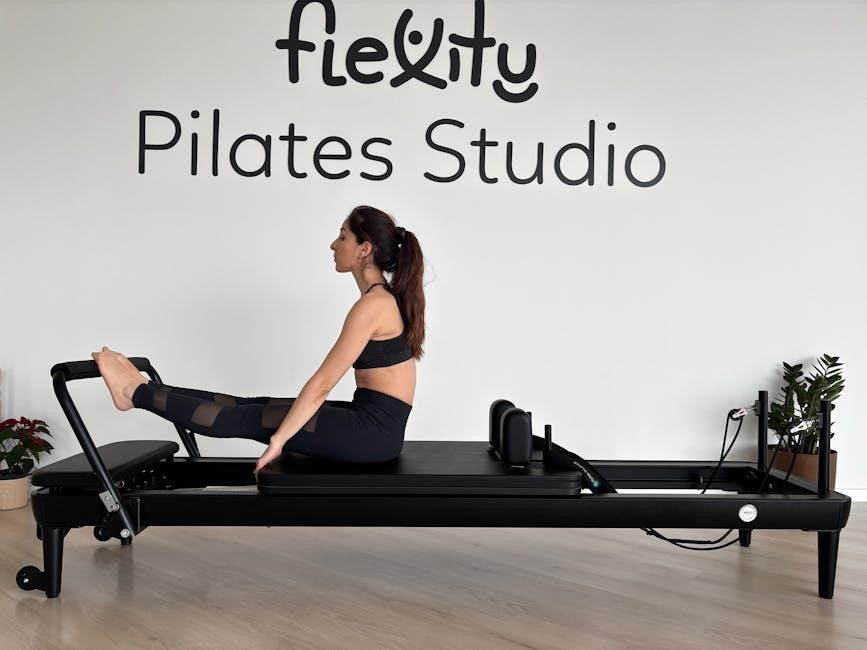
Downloadable Pilates Charts
Pilates practice truly benefits from visual aids, and thankfully, a wealth of downloadable charts are readily available online. BODYBAR Pilates, for example, provides a fantastic, printable wall chart rooted in their core philosophies. These charts are incredibly useful for beginners, as they break down exercises into manageable steps, emphasizing proper form and alignment – crucial elements for a safe and effective workout.
Many PDF resources focus on bodyweight exercises, utilizing a wall for support to help you concentrate on technique. This is an excellent introduction to the method, allowing you to build a strong foundation before progressing to more challenging movements. Searching online for “beginner Pilates chart” or “Pilates exercise PDF” will reveal numerous options, catering to different levels and preferences. Remember to choose charts from reputable sources to ensure accuracy and safety.
These charts often include illustrations or photos demonstrating each exercise, making it easier to understand the correct positioning and movement patterns. They’re a convenient way to have a quick reference guide during your workouts, promoting consistency and mindful practice.
Online Pilates Classes for Beginners
For those preferring guided instruction, numerous online Pilates classes cater specifically to beginners. These classes offer a convenient and accessible way to learn the fundamentals from certified instructors, often providing modifications for different fitness levels. Many platforms offer introductory courses, sometimes accompanied by downloadable resources like PDF exercise guides, to supplement your learning.
Whether you’re seeking live classes or pre-recorded sessions, the options are plentiful. Some services even integrate with downloadable charts, allowing you to follow along visually while receiving real-time feedback or accessing detailed exercise breakdowns. These resources are particularly helpful for understanding precise movements and ensuring correct form, which is paramount in Pilates.
Exploring online options can complement PDF guides, offering a dynamic learning experience. Look for classes that emphasize core engagement, breathing techniques, and controlled movements – the cornerstones of effective Pilates practice.