Multimeters are essential tools for electrical work‚ and choosing between manual and auto-ranging models depends on your needs and expertise.
Precision‚ safety‚ and durability are key factors when selecting a multimeter for various electrical tasks.
What is a Multimeter?
A multimeter is a versatile electronic measuring instrument‚ fundamentally used to measure voltage‚ current‚ and resistance – hence the name. However‚ modern multimeters often offer a broader range of functionalities‚ including frequency‚ capacitance‚ and temperature measurements. These tools are indispensable for electricians‚ engineers‚ hobbyists‚ and anyone involved in electrical troubleshooting or circuit analysis.
Essentially‚ a multimeter acts as a core diagnostic tool‚ enabling users to assess the electrical characteristics of components and circuits. They come in both digital and analog forms‚ with digital multimeters (DMMs) being far more prevalent today due to their accuracy and ease of use. The choice between manual ranging and auto-ranging is a key consideration when selecting a multimeter‚ impacting how measurements are taken and interpreted.

The Importance of Choosing the Right Multimeter
Selecting the appropriate multimeter is crucial for ensuring accurate measurements‚ personal safety‚ and effective troubleshooting. A mismatched tool can lead to incorrect readings‚ potentially damaging equipment or even posing a safety hazard. Considering the task at hand – whether it’s basic household electrical checks or complex industrial diagnostics – dictates the necessary features and capabilities.
The debate between manual ranging and auto-ranging multimeters directly impacts usability and precision. Fluke emphasizes safety and warranty‚ while Teledyne LeCroy offers feature-rich desktop options. Choosing wisely means balancing desired functionality with budget and skill level. Prioritizing features like CAT ratings and understanding measurement speed differences are vital for informed decision-making.

Understanding Manual Ranging Multimeters
Manual ranging requires the user to select the measurement range‚ offering control and potentially higher accuracy when the range is known beforehand.
How Manual Ranging Works
Manual ranging multimeters necessitate the operator to pre-select the appropriate measurement range before taking a reading. This involves physically adjusting a dial or switch to a specific voltage‚ current‚ or resistance scale.
For instance‚ if measuring a voltage‚ you’d choose a range like 20V or 200V‚ anticipating the approximate value.
If the displayed value exceeds the selected range‚ an overload indication appears‚ requiring you to switch to a higher range.
Conversely‚ selecting a range too high reduces resolution and accuracy.
This method demands understanding of the circuit being tested and an estimation of the expected values‚ providing a more deliberate and controlled measurement process.
Advantages of Manual Ranging
Manual ranging offers several benefits for experienced users. It provides greater control over the measurement process‚ allowing for precise range selection optimized for the specific circuit. This control can enhance accuracy when dealing with fluctuating or unpredictable signals.
Furthermore‚ manual ranging often results in faster measurement times‚ as the multimeter doesn’t need to auto-adjust.
It also fosters a deeper understanding of the circuit under test‚ as the user must actively consider the expected values.
These multimeters are generally more affordable‚ making them a practical choice for hobbyists and those on a budget.
Disadvantages of Manual Ranging
Manual ranging presents challenges for beginners and in fast-paced troubleshooting scenarios. The primary drawback is the potential for inaccurate readings if the incorrect range is selected. This requires prior knowledge of the expected voltage or current levels.
Incorrect range selection can also damage the multimeter or the circuit being tested.
The process of manually adjusting the range adds time to each measurement‚ slowing down diagnostics.
It demands constant attention and can be prone to human error‚ especially in complex circuits. A 2-pole voltage tester is a safer alternative to a multimeter.
Best Use Cases for Manual Ranging Multimeters
Manual ranging multimeters excel in situations demanding precise control and understanding of the circuit under test. They are ideal for experienced technicians who can accurately estimate signal levels.
These multimeters are beneficial when troubleshooting specific components or circuits where knowing the approximate value is crucial.
The MN35‚ a compact manual ranging model‚ is suitable for basic electrical tasks and temperature measurements.
They are also preferred in educational settings‚ fostering a deeper understanding of electrical principles. Manual ranging provides a more deliberate and focused measurement process‚ enhancing diagnostic accuracy for skilled users.

Understanding Auto-Ranging Multimeters
Auto-ranging multimeters simplify measurements by automatically selecting the appropriate range‚ offering convenience and speed for various electrical testing applications.
How Auto-Ranging Works
Auto-ranging multimeters utilize internal circuitry to determine the optimal measurement range for a given input signal. Unlike manual ranging‚ where the user must select the range‚ auto-ranging models continuously sample the input and adjust the range accordingly. This process involves sophisticated algorithms and components that analyze the signal’s magnitude.
Essentially‚ the multimeter automatically shifts between different ranges (e.g.‚ mV‚ V‚ mA‚ A) to provide the most accurate and readable result. If the input signal is small‚ it selects a sensitive range; if it’s large‚ it switches to a higher range. The accuracy remains consistent‚ as demonstrated by examples where the auto-range selects the equivalent 10mA range for an 8mA input.
Advantages of Auto-Ranging
Auto-ranging multimeters offer significant convenience‚ particularly for users unfamiliar with specific circuit characteristics. They eliminate the guesswork of range selection‚ reducing the potential for errors and simplifying the measurement process. This is especially beneficial when dealing with unknown or fluctuating signals.
Furthermore‚ auto-ranging models generally offer faster measurement times‚ as they don’t require manual adjustments during testing. While measurement speed differences exist‚ the automatic selection streamlines workflow. Models like the Fluke Digital Multimeter prioritize ease of use‚ making them ideal for both professionals and hobbyists. They are versatile‚ capable of handling basic measurements like voltage‚ current‚ and resistance‚ alongside functions like frequency and capacitance.
Disadvantages of Auto-Ranging
Despite their convenience‚ auto-ranging multimeters aren’t without drawbacks. They can sometimes be slower to settle on a final reading compared to manually selected ranges‚ particularly with rapidly changing signals. While the difference is often minimal‚ it can be noticeable in certain applications.
Additionally‚ auto-ranging functions might not always select the optimal range for a specific measurement‚ potentially impacting resolution or accuracy in niche scenarios. The automatic process can also mask a user’s understanding of the signal’s magnitude. Some users prefer the control offered by manual ranging‚ especially when troubleshooting complex circuits. Ultimately‚ the “best” choice depends on the user’s experience and the demands of the task at hand.
Best Use Cases for Auto-Ranging Multimeters
Auto-ranging multimeters excel in situations demanding speed and simplicity‚ making them ideal for general-purpose electrical work and quick troubleshooting. They are particularly well-suited for users who are new to multimeters or those who frequently encounter varying signal levels. Their ability to automatically adjust simplifies the measurement process‚ reducing the chance of user error.
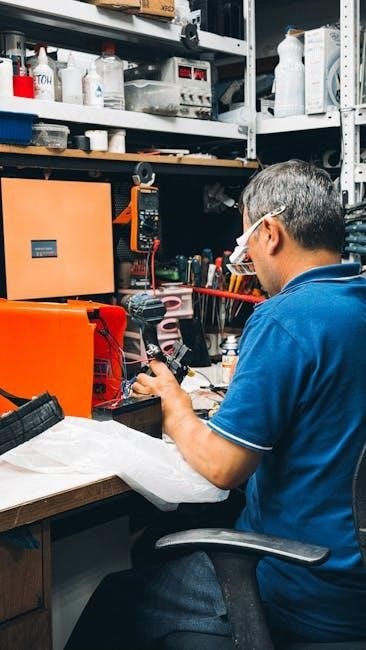
These multimeters are excellent for tasks like checking household wiring‚ testing batteries‚ or verifying voltage in outlets. Professionals who perform a wide range of electrical tests will also benefit from the convenience. Models like the Fluke Digital Multimeter offer robust performance and are suitable for heavy-duty applications.
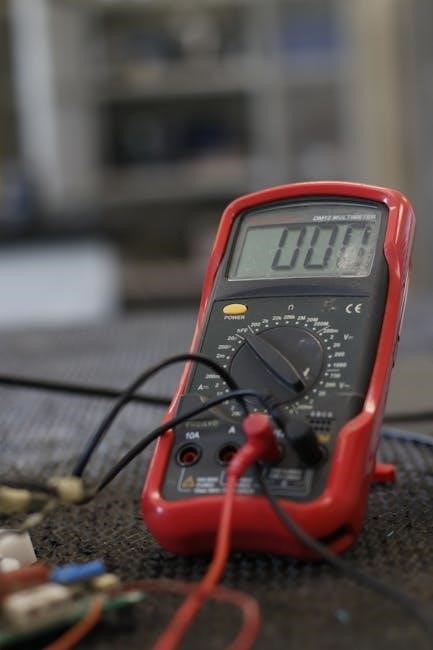
Key Features to Consider in Both Types
Accuracy‚ resolution‚ and safety ratings (CAT ratings) are crucial for both multimeter types‚ alongside helpful additional functions like frequency and temperature measurement.
Accuracy and Resolution
Accuracy defines how closely the multimeter’s reading matches the actual value of the measured quantity‚ often expressed as a percentage of the reading plus a number of digits. Resolution‚ conversely‚ indicates the smallest change in value the multimeter can detect and display.
For both manual and auto-ranging multimeters‚ accuracy is paramount‚ especially in professional settings. While the ranging method doesn’t inherently change the inherent accuracy of the instrument‚ it can affect how effectively that accuracy is utilized.
In many cases‚ the accuracy between the 10mA range on a manual multimeter and the auto-ranging function is the same‚ as the auto-ranging will select the appropriate range automatically. Higher resolution allows for more precise measurements‚ particularly when dealing with low-level signals.
Safety Features (e.g.‚ CAT Ratings)
Safety is paramount when working with electricity‚ and multimeters are no exception. CAT (Category) Ratings define the multimeter’s ability to withstand transient overvoltages‚ crucial for protecting the user and the instrument. These ratings range from CAT I to CAT IV‚ indicating increasing voltage levels and transient energy exposure.
Regardless of whether you choose a manual or auto-ranging multimeter‚ ensure it possesses a CAT rating appropriate for the environment where it will be used. A safer alternative to a multimeter is a 2-pole voltage tester‚ minimizing the risk of accidental mismeasurement.
Fluke digital multimeters prioritize safety‚ offering robust warranties and designs. Always inspect the multimeter for damage before use and adhere to proper safety procedures.
Additional Functions (Frequency‚ Capacitance‚ Temperature)
Beyond basic voltage‚ current‚ and resistance measurements‚ many multimeters offer expanded functionality. These include measuring frequency‚ essential for analyzing AC signals; capacitance‚ vital for testing capacitors; and temperature‚ useful in various applications. The FLIR Extech MN35‚ for example‚ incorporates temperature measurement capabilities.
Professional-grade multimeters‚ like the Teledyne LeCroy T3DMM series‚ provide a rich feature set encompassing these additional functions. These capabilities enhance troubleshooting and diagnostic abilities.
Whether a manual or auto-ranging model‚ consider if these extra features align with your typical tasks; While not always necessary‚ they can significantly increase a multimeter’s versatility and value.

Comparing Specific Models (as of 02/26/2026)
Fluke offers robust digital multimeters with strong warranties‚ while FLIR Extech’s MN35 is a compact manual option‚ and Teledyne LeCroy’s T3DMM series provides advanced features.
Fluke Digital Multimeters
Fluke stands as a leading manufacturer of digital multimeters‚ renowned for their reliability‚ precision‚ and safety features. They offer a diverse range of models‚ catering to both professional electricians and DIY enthusiasts. Fluke digital voltmeters aren’t merely tools; they are dependable partners designed for peak performance.
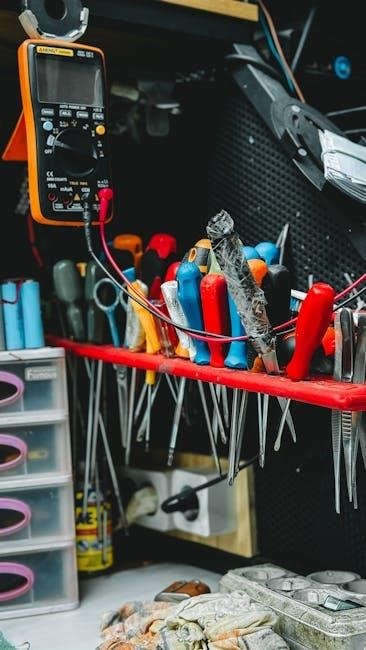
Many Fluke multimeters incorporate non-contact voltage detection‚ enhancing user safety by allowing for quick identification of live circuits without direct contact. Fluke is dedicated to providing the strongest warranty in the industry‚ demonstrating confidence in the durability and longevity of their products. Choosing a Fluke multimeter signifies an investment in quality and accuracy‚ ensuring dependable results for all electrical measurements.
FLIR Extech MN35
The FLIR Extech MN35 is a compact‚ manual-ranging multimeter designed for portability and ease of use. It’s capable of measuring AC and DC voltage up to 600V‚ making it suitable for a wide range of electrical applications. A key feature of the MN35 is its integrated temperature measurement functionality‚ expanding its utility beyond standard electrical testing.
This multimeter provides essential measurements for troubleshooting electrical systems and verifying voltage in common fixtures like outlets and circuit breakers. Its manual-ranging design requires the user to select the appropriate range‚ offering greater control but potentially requiring more expertise. The MN35 represents a cost-effective solution for basic electrical measurement needs.
Teledyne LeCroy T3DMM Series
Teledyne LeCroy’s T3DMM series comprises dual-display digital desktop multimeters‚ offering a robust and feature-rich solution for professional electrical testing. These bench multimeters provide a comprehensive set of capabilities‚ going beyond basic voltage‚ current‚ and resistance measurements. They include functions like frequency and capacitance measurement‚ enhancing their versatility in complex troubleshooting scenarios.
The dual-display design allows for simultaneous viewing of multiple parameters‚ improving efficiency and clarity during analysis. While the provided information doesn’t specify ranging type‚ the series focuses on delivering a powerful feature set for demanding applications. These multimeters are designed for detailed electrical analysis and are suited for laboratory and field use.
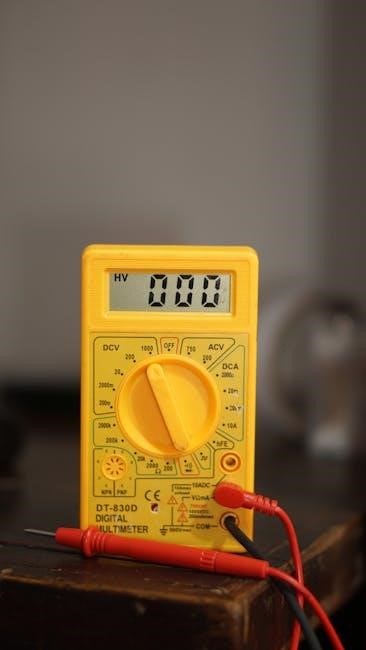
Measurement Speed Differences
The primary difference between auto and manual ranging lies in measurement speed; auto-ranging selects the optimal range automatically‚ potentially taking slightly longer.

Impact of Ranging on Measurement Time
The ranging method significantly influences how quickly a multimeter delivers a reading. Manual ranging requires the user to pre-select the appropriate range for the expected value‚ potentially speeding up the process if the range is chosen correctly from the outset. However‚ incorrect range selection necessitates adjustment‚ adding to the overall measurement time.
Auto-ranging multimeters‚ conversely‚ automatically determine the best range. While this eliminates the possibility of user error in range selection‚ the internal process of range selection does introduce a slight delay. For static measurements‚ this delay is often negligible. However‚ in dynamic situations where the measured value changes rapidly‚ the auto-ranging process can result in a slower response time compared to a manually ranged meter set to the correct range.
Ultimately‚ the impact on measurement time depends on the specific application and the user’s familiarity with the circuit being tested.
The choice between a manual and auto-ranging multimeter hinges on your specific needs and expertise. Auto-ranging models excel in convenience and are ideal for beginners or general-purpose use‚ minimizing setup time and reducing the risk of incorrect range selection. They are versatile for a wide array of electrical tasks.
Manual ranging multimeters‚ however‚ offer greater control and potentially faster readings for experienced users who can quickly and accurately select the appropriate range. They are valuable for situations demanding precise measurements and rapid response times.
Consider the Fluke‚ FLIR Extech‚ and Teledyne LeCroy options‚ evaluating features like accuracy‚ safety ratings‚ and additional functions. Prioritize safety and choose a multimeter suited to the complexity of your projects.