Learning to drive a manual transmission vehicle provides a unique connection with the road, demanding coordination and control. Mastering the car starter unlocks a rewarding driving experience.
Operating a manual car requires synchronizing the clutch, shifter, and throttle, differing significantly from automatic systems. Understanding these mechanics is key to a successful start.
For beginners, the initial steps can seem daunting, but with practice, starting a manual car becomes second nature, offering greater driver engagement and vehicle mastery.
This guide will demystify the process, providing a clear, step-by-step approach to confidently start and operate a manual transmission vehicle, enhancing your driving skills.
Successfully starting a manual car involves understanding the interplay of its components, ensuring a smooth and controlled launch, and ultimately, a more enjoyable driving journey.
What is a Manual Transmission?
A manual transmission, often called a stick shift, is a type of gearbox in a vehicle that requires the driver to manually select gears using a gear stick and a clutch pedal. Unlike automatic transmissions which handle gear changes automatically, a manual system puts the driver in direct control of the engine’s power delivery.
The core function involves physically engaging different gear ratios to optimize engine speed and torque for varying driving conditions. The car starter initiates this process, but the driver dictates when and how power is transferred to the wheels. This system relies on a clutch to temporarily disconnect the engine from the transmission, allowing for smooth gear changes.
Essentially, a manual transmission offers a more involved driving experience, demanding greater driver skill and awareness, but also providing enhanced control and a more direct connection to the vehicle’s mechanics.
Why Learn to Drive a Manual Car?
Learning to drive a manual car, despite the rise of automatics, offers several compelling benefits. It fosters a deeper understanding of vehicle mechanics and enhances driving engagement, making each journey more connected and rewarding. Mastering the car starter is just the beginning of this journey.
Beyond the driving experience, manual transmissions often provide better fuel efficiency and can be more affordable to maintain. They also offer greater control in challenging driving conditions, like snow or steep hills.
Furthermore, knowing how to drive a manual expands your rental car options and provides a valuable skill, offering a sense of accomplishment and a unique driving perspective.
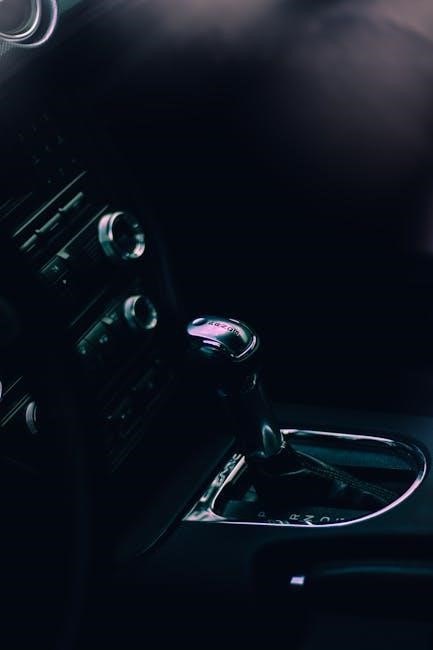
Pre-Starting Checks and Preparations
Before engaging the car starter, ensure the vehicle is in neutral and the parking brake is firmly applied, preventing unintended movement during ignition.
Proper seat and mirror adjustments are crucial for optimal visibility and control, setting the stage for a safe and confident starting procedure.
Ensuring the Vehicle is in Neutral
Confirming the vehicle is in neutral is paramount before attempting to start the car starter. This prevents the engine from engaging a gear, potentially causing a sudden lurch forward or backward. Move the gear shifter to the neutral position – typically the center of the shift pattern.
Wiggle the shifter side-to-side; it should move freely. If resistance is felt, the vehicle isn’t fully in neutral. A failed attempt to start in gear can strain the starter motor and potentially damage the vehicle. Always double-check this crucial step for safety and to protect your car.
Remember, a secure neutral position is the foundation for a smooth and controlled starting experience with a manual transmission.
Engaging the Parking Brake
Activating the parking brake is a vital safety precaution before initiating the car starter. This prevents unintended vehicle movement during the starting process, especially on inclines. Locate the parking brake lever or pedal – often near the center console or footwell.
Firmly engage the parking brake, ensuring it’s fully applied. Confirm its effectiveness by gently attempting to move the vehicle while the brake is engaged. A properly set parking brake provides peace of mind and prevents potential accidents.
Always prioritize safety by utilizing the parking brake before starting a manual transmission vehicle.
Adjusting the Driver’s Seat and Mirrors
Prior to starting the car starter, proper seating position and mirror adjustment are crucial for control and visibility. Adjust the driver’s seat to allow comfortable reach of all pedals, including the clutch, without straining. Ensure your back is fully supported.
Next, adjust the rearview and side mirrors to eliminate blind spots and provide a clear view of your surroundings. Proper mirror positioning enhances awareness and contributes to safer driving.
Optimal comfort and visibility are paramount before engaging the ignition, ensuring a confident and controlled start.
Step-by-Step Starting Procedure
Initiating a manual car starter requires precise coordination. Depress the clutch, turn the key, find the friction point, add throttle, and release the brake.
Mastering this sequence ensures a smooth start, preventing stalls and maximizing control over the vehicle’s initial movement.
Depressing the Clutch Pedal
Fully depressing the clutch pedal is the foundational first step when starting a manual transmission car. This action disengages the engine from the wheels, allowing for a smooth transition into gear without unwanted movement or jarring.
Pressing the pedal all the way to the floor ensures complete disengagement, preventing grinding gears and potential damage to the transmission. Maintain firm, consistent pressure throughout the starting process.
Keep the clutch depressed until you’ve initiated the engine and begun to find the friction point, coordinating it with the ignition and throttle for a controlled start.
Remember, the clutch is your primary control for managing power transfer, so mastering its full range of motion is crucial for a successful and safe start.
Turning the Ignition Key
With the clutch pedal fully depressed, it’s time to turn the ignition key to start the engine. Ensure the key is inserted correctly and turn it clockwise, applying steady pressure until the engine cranks and fires up.
Avoid holding the key in the ‘start’ position for extended periods, as this can strain the starter motor. Once the engine is running, release the key, allowing it to return to the ‘on’ position.
Listen for the engine to catch and run smoothly. If it doesn’t start immediately, repeat the process, checking for potential issues like a low battery or fuel supply.
Maintaining a depressed clutch throughout this process is vital, preventing the car from lurching forward if it were accidentally in gear.
The “Sweet Spot” ― Finding the Friction Point
Slowly release the clutch pedal, and you’ll reach a point where the engine’s RPMs begin to drop slightly, and you feel the car wanting to move – this is the friction point.
It’s a delicate balance between the engine and transmission engaging. Practice finding this point repeatedly; it’s crucial for smooth starts. The car may vibrate subtly at this stage.
Holding the clutch at the friction point prevents stalling while allowing power to transfer to the wheels. It requires a sensitive touch and coordination with the throttle.
Mastering the friction point is the key to avoiding jerky starts and ensuring a controlled launch, forming the foundation of manual transmission driving skill;
Adding Gentle Throttle
As you hold the clutch at the friction point, gently press the accelerator pedal to increase engine RPMs slightly. This provides the power needed to overcome inertia and begin moving.
Avoid excessive throttle; a smooth, controlled increase is key. Too much gas will cause the car to lurch forward, while too little may lead to stalling. Listen to the engine’s sound.
The goal is to find a balance where the engine doesn’t bog down or race excessively. Coordination between your feet is paramount – clutch control and throttle application work together.
Practice this step repeatedly to develop muscle memory and a feel for the appropriate amount of throttle needed for a smooth, controlled start in your manual transmission vehicle.
Releasing the Parking Brake
Once you feel the engine engaging and the car beginning to pull forward slightly at the friction point, it’s time to release the parking brake. Do this smoothly and deliberately.
Ensure you’re still maintaining consistent pressure on the accelerator and clutch. A jerky release of the brake can cause the car to stall or roll backward, especially on an incline.
Coordinate this action with a slight increase in throttle if needed, maintaining a gentle balance between clutch engagement, throttle input, and brake disengagement.
Practice makes perfect; mastering this coordination is crucial for smooth starts. A controlled release prevents unwanted movement and ensures a confident launch in your manual car.
Troubleshooting Common Starting Issues
Encountering difficulties when starting a manual car is common; issues range from battery problems to clutch coordination. Identifying the cause ensures a swift resolution.
Stalling, grinding gears, or difficulty finding the friction point are frequent challenges. Understanding these symptoms helps diagnose and address the underlying problem effectively.
This section provides solutions for common starting hiccups, empowering you to confidently troubleshoot and get back on the road with your manual transmission vehicle.
The Car Doesn’t Start ― Battery Issues
If your manual transmission car fails to start, a depleted or faulty battery is a primary suspect. Listen for a clicking sound when turning the key – this often indicates insufficient power to engage the starter motor.
Check the battery terminals for corrosion and ensure they are securely connected. Headlights dimming significantly or not illuminating at all when attempting to start further suggests a battery problem.
Consider jump-starting the car with jumper cables and a functioning vehicle. If the car starts with a jump, the battery likely needs replacing or recharging. A professional battery test can confirm its condition.
Remember, even a relatively new battery can fail due to extreme temperatures or infrequent use. Always prioritize safety when jump-starting and consult a mechanic if issues persist.
The Car Stalls Immediately
If your manual car starts but stalls instantly, the issue often lies with fuel delivery or ignition. A common cause is insufficient fuel reaching the engine, potentially due to a clogged fuel filter or failing fuel pump.
Another possibility is a problem with the ignition system, such as a faulty crankshaft position sensor preventing the engine from maintaining combustion. The engine needs a consistent spark.
Ensure you’re properly depressing the clutch pedal during starting, as some cars have safety mechanisms preventing operation without it. A quick check of the fuel gauge is also advisable.
If the problem persists, professional diagnosis is recommended to pinpoint the exact cause and prevent further damage to the engine or fuel system.
Difficulty Finding the Friction Point
Struggling to locate the friction point – where the clutch begins to engage the engine – is a common hurdle for new manual drivers. It requires developing a feel for the clutch pedal’s travel and engine response.
Slowly release the clutch while maintaining a steady, gentle pressure. Listen for a slight change in engine note and feel for a subtle vibration as the clutch starts to bite.
Avoid releasing the clutch too quickly, as this can cause the car to jerk or stall. Practice in a level, open area to build muscle memory and refine your coordination.
If consistently unsuccessful, consider seeking guidance from an experienced driver to receive personalized feedback and refine your technique.
Grinding Gears During Start-Up
Hearing a grinding noise when starting a manual car typically indicates incomplete clutch disengagement or attempting to select a gear before the clutch is fully depressed.
Ensure the clutch pedal is pressed all the way to the floor before shifting into first gear. This fully separates the engine from the transmission, preventing gear clash.
If grinding persists, avoid forcing the gear lever. Instead, fully depress the clutch again, return the shifter to neutral, and retry the gear selection slowly and deliberately.
Repeated grinding can damage the synchronizers within the transmission, so addressing the issue promptly is crucial for preventing costly repairs.
Understanding the Clutch Pedal
The clutch pedal is vital for disconnecting the engine from the wheels, enabling gear changes and smooth starts. Mastering its use is fundamental to manual transmission control.
Proper clutch operation involves a smooth, full depression and controlled release, coordinating with the throttle for seamless acceleration and preventing stalling.
Understanding the clutch’s function allows drivers to confidently engage and disengage power, ensuring a responsive and enjoyable driving experience with a car starter.
Clutch Pedal Functionality Explained
The clutch pedal’s primary role is to temporarily disconnect the engine’s power from the transmission, allowing for gear selection and preventing stalling during starts. When fully depressed, it disengages the engine, enabling a neutral state or gear changes.
Releasing the clutch gradually re-engages the engine, transferring power to the wheels. This process requires coordination with the throttle to avoid abrupt movements or stalling, especially when starting the car.
Essentially, the clutch acts as a bridge, controlling the flow of power. Understanding its full range of motion – from full depression to complete engagement – is crucial for smooth operation and mastering the manual transmission car starter.
Proper Clutch Engagement Techniques
Smooth clutch engagement is vital for a successful manual car starter experience. Begin by slowly releasing the clutch pedal while simultaneously applying gentle pressure to the accelerator. This coordinated action finds the “friction point,” where the engine begins to engage.
Avoid releasing the clutch too quickly, as this can cause the car to stall or jerk. Conversely, releasing it too slowly leads to clutch slippage, causing unnecessary wear.
Practice finding that sweet spot – the balance between clutch release and throttle application – to achieve a seamless and controlled start, minimizing stress on the drivetrain and maximizing efficiency.
Avoiding Clutch Slippage
Clutch slippage occurs when the clutch doesn’t fully engage the engine, causing the engine’s RPM to rise without a corresponding increase in vehicle speed during manual car starter operation. This generates heat and accelerates wear on the clutch disc.
To prevent slippage, ensure sufficient throttle is applied alongside gradual clutch release. A fully engaged clutch transmits power efficiently, avoiding unnecessary friction and prolonging its lifespan.
Listen for engine sounds; a high-pitched whine often indicates slippage. Correcting this immediately protects the clutch and maintains optimal performance.
Mastering the Gear Shifter
The gear shifter is crucial for selecting the appropriate gear during manual car starter operation, ensuring smooth transitions and optimal engine performance.
Understanding the shift pattern and practicing precise movements are key to efficient gear changes, enhancing control and driving enjoyment.
Proper technique minimizes wear and tear, contributing to a longer lifespan for the transmission and a more responsive driving experience.
Gear Shift Pattern Familiarization
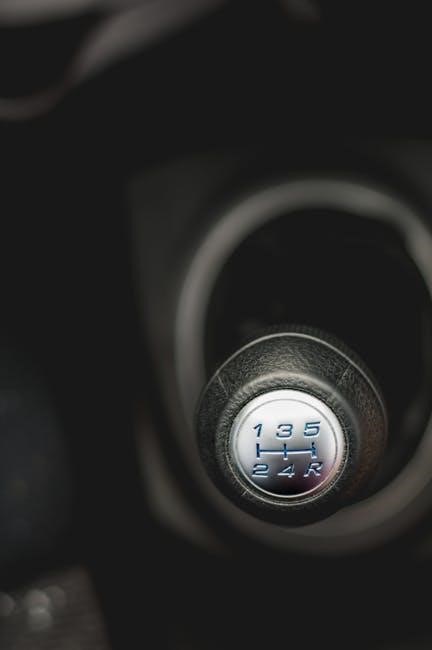
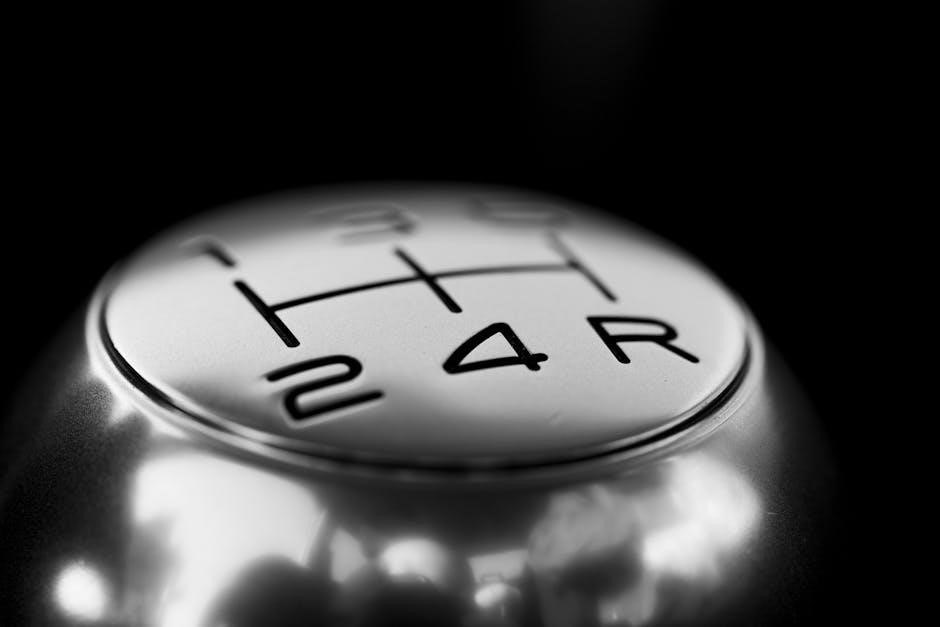
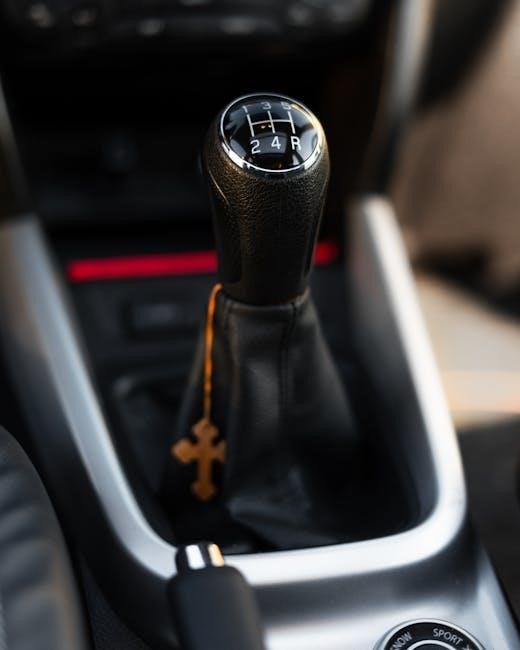
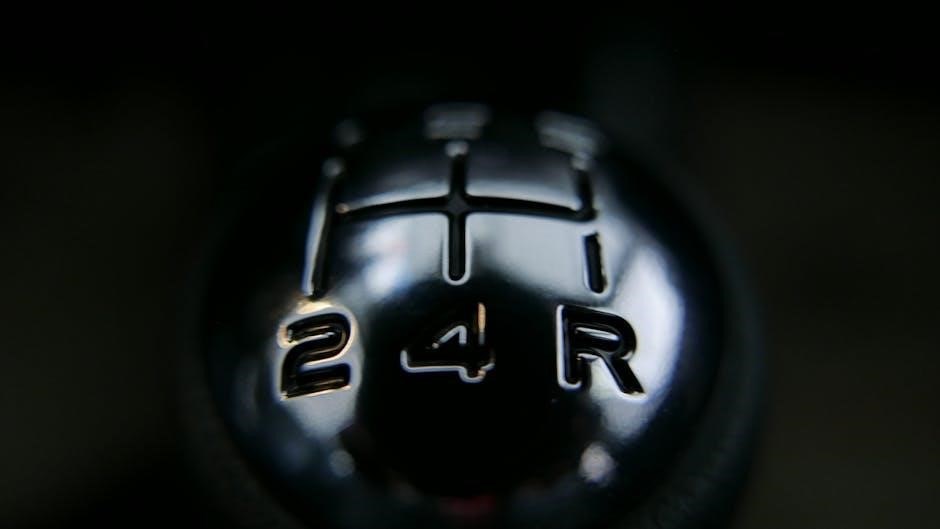
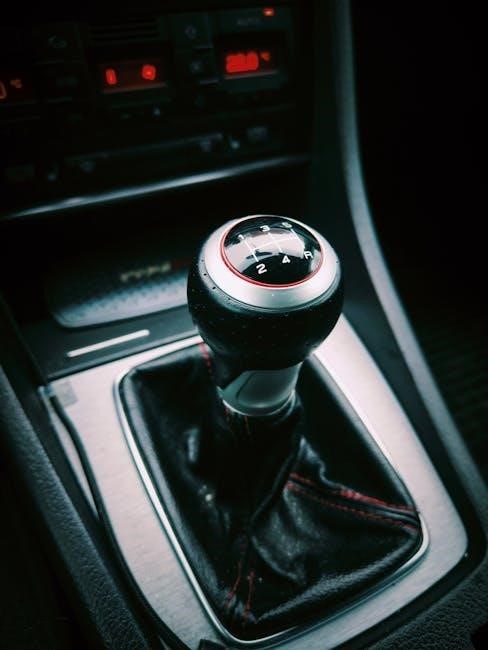
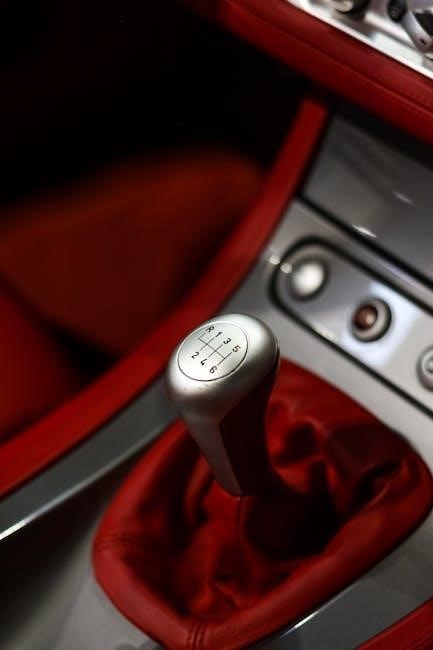
Before attempting to start and drive a manual transmission vehicle, complete familiarity with the gear shift pattern is absolutely essential. Most manual cars utilize an “H” pattern, typically displaying the layout on the shift knob itself.
First gear is usually positioned to the upper left, while reverse varies depending on the vehicle, often requiring a collar or button press. Neutral resides in the center, allowing free movement of the shifter.
Practice moving the shifter through the pattern while the engine is off, visualizing each gear selection. This muscle memory will prove invaluable when coordinating with the clutch and throttle during the car starter process, preventing accidental gear engagement and ensuring smooth operation.
Smooth Gear Changes
Achieving smooth gear changes is crucial for a comfortable and efficient driving experience with a manual transmission. This skill builds upon mastering the car starter and clutch control, requiring precise coordination.
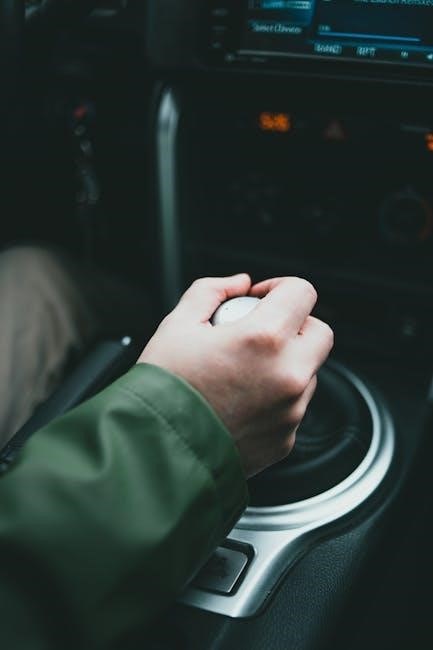
To upshift, fully depress the clutch, move the shifter to the next higher gear, and simultaneously release the clutch while gently applying throttle. Downshifting follows a similar process, but may require rev-matching for seamless transitions.
Avoid abrupt movements; aim for a fluid motion. Practice makes perfect – consistent practice will refine your timing and minimize jerking, enhancing overall driving smoothness and control.
Downshifting Techniques
Mastering downshifting is essential for maintaining control and engine braking, building upon the foundation of a successful car starter engagement. It prepares the vehicle for corners, slowing down, or increased power.
The core technique involves depressing the clutch, shifting to a lower gear, and then ‘rev-matching’ – briefly increasing the engine speed to match the wheel speed in the new gear. This minimizes jolts.
Proper rev-matching creates a smoother transition, reducing stress on the drivetrain. Practice coordinating the throttle and clutch for seamless downshifts, enhancing control and driving enjoyment.
Hill Starts with a Manual Transmission
Hill starts demand precise coordination, building on a successful car starter engagement, to prevent rollback. Mastering this technique ensures confident uphill driving.
Utilizing the handbrake provides crucial security, allowing drivers to focus on clutch and throttle control while preventing unwanted movement on inclines.
Smoothly transitioning from brake to throttle, while releasing the handbrake, delivers a controlled ascent, showcasing mastery of manual transmission fundamentals.
Using the Handbrake for Hill Starts
Employing the handbrake is paramount when initiating a hill start in a manual transmission vehicle. It effectively holds the car stationary, preventing rollback while you coordinate the clutch and throttle – building upon a successful car starter engagement.
Engage the handbrake firmly before attempting to move forward. This allows you to focus solely on finding the friction point with the clutch and applying gentle throttle without the added stress of controlling rollback. Once you feel the engine begin to pull, gradually release the handbrake as you increase throttle input.
Practice this technique in a safe, controlled environment to develop muscle memory and refine your coordination. A smooth release of the handbrake, synchronized with clutch and throttle, is key to a seamless and confident hill start.
Coordinating Clutch and Throttle on a Hill
Mastering the coordination of the clutch and throttle is crucial for successful hill starts, building upon the initial car starter engagement. The goal is to prevent rollback while smoothly transitioning into forward motion. Begin by slowly releasing the clutch to find the friction point – where the engine starts to engage.
Simultaneously, gently apply throttle to provide power. The amount of throttle needed will vary depending on the steepness of the hill. As you feel the car wanting to move forward, gradually release the clutch further while maintaining consistent throttle.
Avoid releasing the clutch too quickly, which can cause stalling, or applying too much throttle, leading to a jerky start. Practice makes perfect; smooth coordination is key.
Preventing Rollback
Rollback, the undesirable backward movement of a manual car on a hill, is a common concern for new drivers. Utilizing the handbrake effectively is the primary method to prevent this, especially when initially learning the car starter procedure. Engage the handbrake firmly before releasing the foot brake and attempting to move forward.
As you find the friction point with the clutch and apply gentle throttle, gradually release the handbrake. This allows the engine to take over without allowing the car to roll back.
Practice this technique to develop a feel for the coordination required, ensuring a smooth and controlled start on inclines.
Advanced Starting Techniques
Mastering techniques like heel-toe downshifting and rev matching elevates manual transmission control, optimizing performance and smoothness during the car starter process.
These skills demand precise footwork and timing, enabling seamless gear changes and maintaining engine efficiency for a more dynamic driving experience.
Refining these advanced methods unlocks a deeper understanding of vehicle dynamics, enhancing both driving enjoyment and overall control on the road.
Heel-Toe Downshifting
Heel-toe downshifting is an advanced technique primarily used in performance driving, though understanding its principles enhances overall manual transmission skill. It involves simultaneously braking with the ball of your foot while ‘blipping’ the throttle with your heel – or the side of your foot – to match engine speed to the lower gear.
This prevents abrupt shifts and maintains vehicle stability, particularly during cornering. While not directly related to the initial car starter process, mastering heel-toe improves overall control and smoothness. It requires significant practice to coordinate the movements effectively, ensuring a seamless transition between gears and minimizing disruption to vehicle balance.
The goal is to synchronize engine RPM with wheel speed, creating a fluid downshift that avoids unsettling the car. It’s a technique best practiced in a controlled environment, building muscle memory and refining coordination.
Rev Matching
Rev matching is a crucial technique for smooth gear changes in a manual transmission, enhancing driving experience and reducing stress on the drivetrain. It involves briefly increasing the engine’s RPMs to match the speed of the transmission when shifting down, creating a seamless transition.
Although not directly involved in the initial car starter procedure, mastering rev matching contributes to overall driving finesse. By anticipating the required engine speed, you minimize the jerkiness often associated with downshifts, improving vehicle control and passenger comfort.
Essentially, it’s about pre-emptively adjusting engine speed to align with the gear you’re selecting, resulting in a smoother, more efficient, and less wearing gear change.
Safety Considerations
Prioritize a safe, open space for initial practice with the car starter. Maintain awareness of surroundings, and understand emergency stop procedures for confident control.
Always engage the parking brake during practice, preventing unintended movement. Gradual clutch release and throttle control are vital for safe starts and preventing stalls.
Remember, mastering the manual transmission requires patience and focus; avoid distractions and prioritize a controlled learning environment for optimal safety.
Practice in a Safe Environment
Selecting an appropriate practice location is paramount when learning to start a manual transmission vehicle. An empty parking lot, a quiet residential street with minimal traffic, or a secluded field are ideal choices. Avoid busy roads, intersections, or areas with pedestrians and obstacles.
The goal is to minimize distractions and potential hazards, allowing you to focus entirely on coordinating the clutch, throttle, and car starter. This controlled environment fosters confidence and reduces anxiety, enabling you to develop muscle memory without the pressure of external factors.
Ensure the area is relatively flat to simplify hill starts, which present an additional challenge. Starting on a level surface allows you to concentrate solely on the fundamental starting procedure before tackling more complex maneuvers. Remember, safety and focused practice are key to mastering this skill.
Awareness of Surroundings
Maintaining constant awareness of your surroundings is crucial when operating a manual transmission vehicle, especially during the starting process. Scan for pedestrians, cyclists, and other vehicles before and while engaging the car starter. Check your mirrors frequently to monitor traffic flow.
Be prepared to react quickly to unexpected movements or changes in the environment. Even in a controlled practice area, unforeseen circumstances can arise. Anticipate potential hazards and maintain a safe distance from other objects and people.
Clear communication is also vital. If practicing with an instructor, ensure they are aware of your intentions. A heightened sense of awareness contributes to a safer and more confident driving experience.
Emergency Procedures
Knowing emergency procedures is paramount when learning to drive a manual transmission vehicle. If the car stalls unexpectedly while starting, immediately engage the parking brake and shift into neutral. Attempt to restart, avoiding repeated cranking.
If unable to restart, activate hazard lights to alert other drivers. In a rolling situation, depress the clutch and brake firmly, steering to a safe location away from traffic. Be prepared to use the handbrake if necessary.
Familiarize yourself with your vehicle’s specific emergency features. Practice these procedures in a safe environment to build confidence and ensure a swift, appropriate response in a real-world emergency.
Maintaining Your Manual Transmission
Regular inspections of the clutch system are vital for optimal car starter performance. Address any unusual noises promptly, and maintain proper transmission fluid levels.
Consistent maintenance ensures smooth operation and prevents premature wear, extending the life of your manual transmission and its starting capabilities.
Proactive care, including clutch adjustments, contributes to reliable starts and a consistently enjoyable driving experience with your manual vehicle.
Regular Clutch Inspections
Consistent clutch inspections are paramount for maintaining a reliable car starter system in a manual transmission vehicle. Examine the clutch disc for wear, checking for signs of glazing, cracking, or thinning. Inspect the pressure plate for heat discoloration or damage, as this impacts engagement.
Furthermore, assess the throw-out bearing for smooth operation and any unusual noises during clutch pedal actuation. A failing throw-out bearing can directly hinder the car starter’s ability to engage properly. Regularly check the clutch master and slave cylinders for leaks, ensuring hydraulic pressure is maintained for optimal clutch function.
Early detection of clutch issues prevents more significant and costly repairs, safeguarding the longevity of your manual transmission and ensuring consistent, trouble-free starts.
Transmission Fluid Checks
Maintaining the correct transmission fluid level and condition is crucial for a smoothly operating car starter in a manual transmission. Low fluid levels can cause difficulty engaging gears, impacting the starter’s ability to turn the engine over efficiently.
Regularly check the fluid’s color and smell; it should be a clear amber and free of burnt odors. Dark or gritty fluid indicates contamination and requires a flush. Ensure you use the manufacturer-recommended fluid type, as incorrect fluid can damage internal components.
Proper fluid levels and quality ensure optimal lubrication and hydraulic pressure, contributing to seamless clutch engagement and reliable starting performance.
The Future of Manual Transmissions
Despite declining sales, manual transmissions retain enthusiast appeal, offering a direct driving experience. Modern car starters must adapt to evolving driver preferences and technologies.
Electric vehicles and advanced automatics pose challenges, but a niche market for manual cars persists, demanding continued innovation in starter systems and overall drivetrain design.
The future may see hybrid systems paired with manual gearboxes, blending efficiency with driver engagement, ensuring the car starter remains relevant.